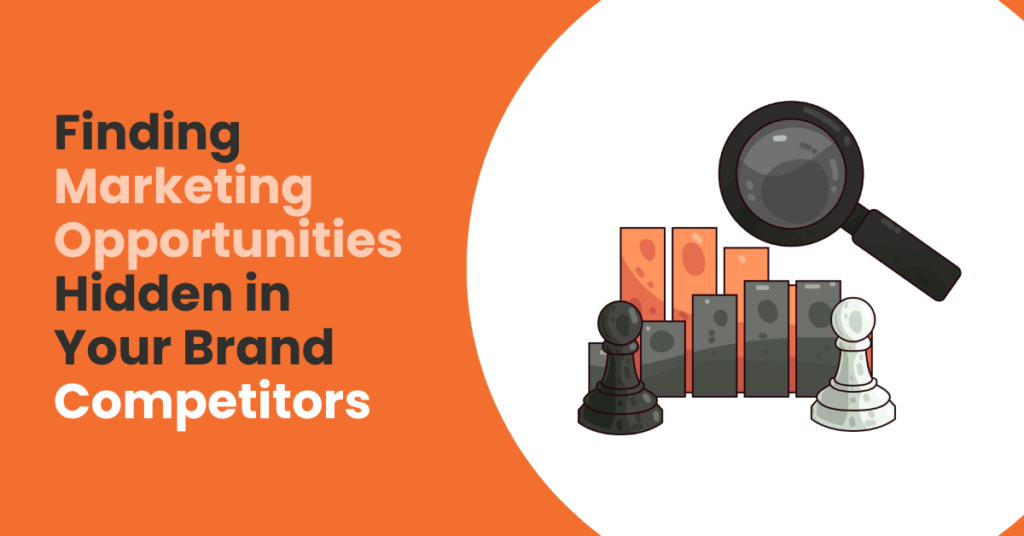
Finding Marketing Opportunities Hidden in Brand Competitors
In the world of marketing, competition isn’t something you should fear, avoid, or pretend doesn’t exist. It’s actually something incredibly valuable to learn from, study carefully, and use strategically to strengthen your own position.
Every single brand competitor you have, whether they’re massive corporations or small startups, holds valuable lessons about what approaches work in your market, what strategies fall flat and waste resources, and where your next big breakthrough opportunity might be hiding in plain sight. The trick is knowing how to look for these insights and actually use them effectively.
By studying your competitors closely and systematically, not obsessively but thoughtfully, you can uncover powerful insights that help you improve your marketing strategy, refine your brand positioning to stand out more clearly, and connect more effectively with your target audience in ways that feel authentic and natural rather than forced.
Also read: Integrated Marketing: Create Seamless Brand Experience

Why You Need to Analyze Your Brand Competitors
Here’s a perspective shift that many marketers miss: your brand competitors are more than just rivals fighting for the same customers. They’re actually mirrors reflecting the current realities of your market, showing you what customers respond to, what messaging resonates, what price points work, and what strategies are already saturated.
Think about it this way: your competitors have already invested time, money, and effort testing different approaches in the same market you’re operating in.
They’ve made mistakes you can avoid. They’ve discovered what works that you can learn from. They’ve built audiences that overlap with yours, giving you insight into shared customer preferences and behaviors. This is essentially free market research happening right in front of you, all you need to do is pay attention and analyze it intelligently.
Understanding who your competitors are, what they’re offering customers, and how they actively engage their audience gives you a dramatically clearer picture of your own brand’s genuine strengths and areas where you’re falling short. It provides context that’s impossible to get when you’re only looking inward at your own business.

By thoroughly analyzing their strategies across different channels and touchpoints, you can identify several critical opportunities:
Market gaps your brand can fill
These are needs, preferences, or customer segments that exist in your market but that none of your competitors are adequately serving.
Maybe everyone’s targeting young professionals but ignoring retirees. All competitors may focus on premium offerings but there’s demand for mid-range options. These gaps represent low-competition opportunities where you can establish dominance quickly.
Identifying these gaps requires looking not just at what competitors are doing, but at what they’re not doing. Read through customer reviews and complaints.
What do people wish existed but can’t find? What frustrations come up repeatedly? These unmet needs are your opportunities to step in and become the solution that fills the void.
Untapped audiences that competitors haven’t reached yet
Sometimes entire demographic groups or psychographic segments are being overlooked by existing players in your market.
Perhaps competitors are all marketing in English, but there’s a substantial audience that prefers content in their native language. Maybe everyone’s focusing on women when men also have interest. Finding these overlooked audiences gives you a chance to build loyalty before competitors catch on.
Content and campaign ideas that resonate with your target audience
When you see competitors creating content that generates massive engagement, viral reach, or obvious conversions, you’re getting direct feedback about what your shared audience finds valuable, entertaining, or compelling. You can learn from their successes and create your own unique version that adds your perspective and improves on their approach.
The key principle to remember: competitor awareness isn’t about mindless imitation or copying what others do. It’s about drawing inspiration from what works, learning from what doesn’t, and using that knowledge to drive innovation and differentiation in your own strategy.

How to Analyze Your Brand Competitors
Effective competitor analysis isn’t just casually browsing their social media or glancing at their website once. It means looking beyond the surface-level appearances and digging deeper into the strategy, execution, and results. Here’s how to approach it strategically and systematically:
1. Identify your main competitors
Start by creating a comprehensive list of both types of competitors in your market; direct competitors and indirect competitors.
Direct competitors are those offering similar or identical products and services to the same target audience you’re pursuing, you’re essentially interchangeable in customers’ minds. Indirect competitors are brands solving the same core problem or fulfilling the same fundamental need, but doing it in a different way with alternative solutions.
For example, if you sell meal prep services, direct competitors are other meal prep companies. Indirect competitors might include grocery delivery services, cooking class platforms, or even restaurant subscription services, all addressing the same underlying need of “making dinner easier” through different approaches.
Don’t limit yourself to just two or three obvious competitors. Aim to identify at least 5-10 key players across both categories to get a complete picture of your competitive landscape.
2. Observe their online presence
This is where you roll up your sleeves and do thorough research across multiple digital touchpoints. Read through their customer reviews on Google, Yelp, or industry-specific platforms.
Analyze their website design, navigation, messaging, and user experience. Spend time on their social media channels across different platforms—Instagram, Facebook, LinkedIn, TikTok, wherever they’re active. Study their ad campaigns if you can find them (tools like Facebook Ad Library make this easy).
Don’t just passively browse, take notes. Create a spreadsheet or document where you track what you’re observing. What’s their brand voice, professional and formal, or casual and friendly? What colors and visual styles do they use consistently? What value propositions do they emphasize in their messaging? How do they structure their website navigation and calls-to-action? This systematic approach ensures you’re actually gathering useful intelligence rather than just casually looking around.
As you do this research, actively notice what messages they repeat consistently across channels, this reveals their core value proposition and positioning.
Observe how they engage with followers in comments and DMs, are they responsive and helpful, or do they ignore interactions? Pay attention to what type of content performs well, which posts get high engagement, shares, or saves.
Look for patterns that emerge. If video content consistently outperforms static images for them, that tells you something about your shared audience’s preferences.
3. Compare their customer engagement
Engagement metrics reveal the quality of a brand’s relationship with its audience far better than follower counts or reach numbers. High follower counts mean nothing if nobody’s actually engaging with the content.
Do their followers actively comment with thoughtful responses and questions, or just drop generic emojis? Are posts being shared widely to other networks, suggesting content people find valuable enough to recommend? More importantly, do you see the same names appearing repeatedly in comments, indicating loyal community members rather than one-time visitors?
High engagement and visible loyalty often signal that a competitor has developed a strong brand voice that resonates, built genuine community trust through consistent value delivery, and created an audience that feels personally connected to the brand. These are powerful competitive advantages you need to understand and match or counter.
4. Spot their weaknesses
This is where opportunity reveals itself most clearly. Every single brand, no matter how successful or established, has weaknesses, blind spots, and areas where they underperform or drop the ball.
Look for areas where competitors consistently fall short. Maybe they’re slow to respond to customer inquiries, leading to frustration in comments.
Perhaps their branding is unclear or confusing, making it hard to understand what they actually offer. They might post inconsistently, going silent for weeks then flooding feeds. Their website might be clunky and difficult to navigate. Their customer service might be impersonal and unhelpful based on review feedback.
Each weakness you identify represents an opportunity to position your brand to do better. If competitors have slow response times, make rapid, helpful responses your competitive advantage. If their branding is confusing, make yours crystal clear and easy to understand. If they’re inconsistent, make reliability and consistency your hallmark.
5. Leverage your findings
Gathering insights is pointless unless you actually use them to improve your own strategy. Take everything you’ve learned and translate it into concrete action.
Use these insights to sharpen your content strategy, create content that fills gaps competitors are missing, or create better versions of content types that work well for them. Improve your customer experience in areas where competitors fall short, if they’re slow, be fast; if they’re impersonal, be warm and human. Strengthen your overall brand presence by differentiating in ways that matter to your shared audience.
The goal is strategic improvement informed by competitive intelligence, not paralysis from overthinking what competitors are doing.
Also read: 10 Tips for Effective Digital Marketing

Turning Competition Into Opportunity
Once you genuinely understand your competitors, their strengths, weaknesses, strategies, and positioning, the critical next step is transforming that knowledge into tangible growth for your own brand.
Maybe through your analysis you’ve discovered a niche audience segment they’ve completely missed or ignored. Perhaps you’ve identified an emerging trend that’s gaining momentum but that none of your competitors are capitalizing on yet.
You might have found a common pain point that customers mention repeatedly in reviews but that no competitor is adequately addressing in their offering or messaging.
Every single one of these discoveries represents your chance to stand out meaningfully. These are opportunities to establish yourself as the solution, the alternative, or the better option in ways that matter to customers.
The most powerful competitive advantage often comes from doing something your competitors can’t or won’t do. Maybe they’re all focused on rapid growth and have sacrificed customer service quality, you can win by offering exceptional, personalized service.
Maybe they’ve all adopted similar pricing models, you can differentiate with a unique pricing structure that better fits customer needs. Maybe they all communicate in technical jargon, you can stand out by explaining things in simple, accessible language.
Your goal through this entire process isn’t to become a copycat version of your competitors, mimicking their every move and strategy. It’s to use what you learn strategically to differentiate your brand in meaningful ways, communicate more effectively by understanding what resonates with your shared audience, and deliver greater value to your customers than they can get elsewhere.
Sometimes differentiation means doing something completely different from competitors. Other times it means doing the same basic thing but executing it far better, faster, more affordably, or more personally. The key is finding your unique angle based on competitive insights combined with your own strengths and values.
Also read: How Social Media Management Can Help to Boost Your Company

Grow Smarter, Not Louder
Here’s a truth that separates successful brands from struggling ones: the most successful brands don’t outspend their competitors by throwing unlimited money at advertising, and they don’t outshout them by being the loudest voice in every conversation. They outsmart them by making better strategic decisions based on deep market understanding.
By consistently studying your brand competitors, not obsessively but regularly and thoughtfully, you gain the valuable insights needed to adapt your strategy as markets shift, innovate in ways that create genuine differentiation, and grow sustainably rather than through unsustainable short-term tactics.
The competition will always exist in any healthy market. That’s not going away. But how you use the knowledge you gain from studying them, whether you ignore it, become paralyzed by it, or strategically leverage it, determines whether you simply survive by barely keeping pace, or whether you truly lead by setting the standard others follow.
Remember that competitive analysis isn’t a one-time project you complete and forget about. Markets evolve. Competitors change their strategies. New players enter your space. Customer preferences shift. What worked six months ago might not work today.
Make competitor analysis a regular practice, quarterly reviews at minimum, or monthly if you’re in a fast-moving industry. This ongoing awareness keeps you agile and responsive rather than reactive and caught off-guard.
The choice between surviving and leading comes down to how intelligently you approach competition. Make it work for you rather than against you.
Also read: Thriving the Digital Marketing Landscape: Trends and Tactics