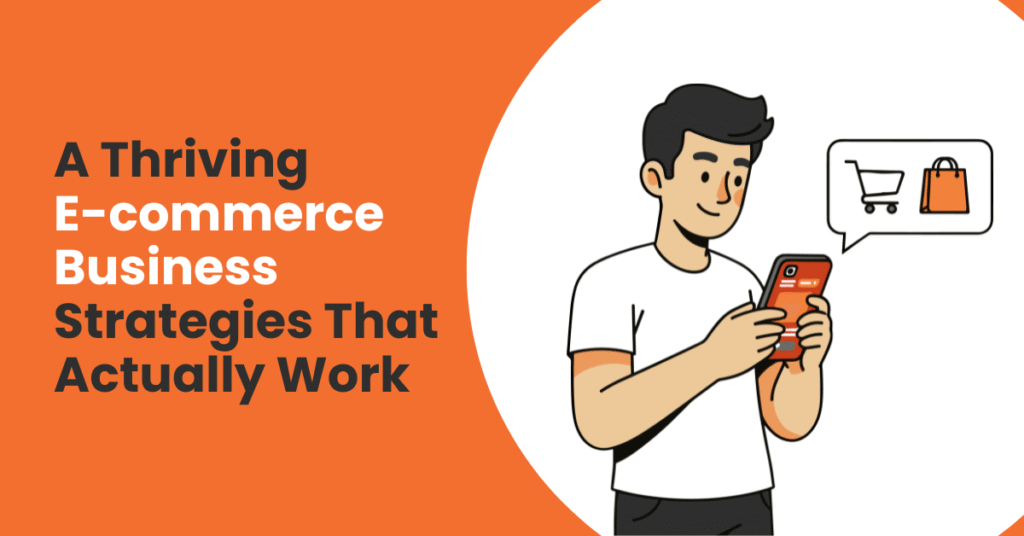
A Thriving E-commerce Business Strategies That Actually Work
The e-commerce landscape has transformed dramatically over the past decade, evolving from a novel alternative to traditional retail into the primary shopping channel for millions of consumers worldwide.
What began as a convenience option has become the default for many product categories, reshaping how businesses approach sales, marketing, and customer relationships.
Running a successful e-commerce business today requires far more than simply listing products on a website and waiting for orders to arrive. The market has matured, competition has intensified across virtually every product category, and consumer expectations have risen to levels that would have seemed unrealistic just a few years ago.
Customers now expect seamless experiences, fast shipping, easy returns, personalized recommendations, and responsive support, all at competitive prices. Yet despite these challenges, e-commerce continues to offer tremendous opportunities for businesses willing to approach it strategically.
The barriers to entry remain relatively low compared to traditional retail, the potential customer base spans the globe, and the ability to test and iterate quickly gives agile businesses significant advantages.
This guide explores the fundamental strategies, practical tactics, and critical considerations for building an e-commerce business that doesn’t just survive but genuinely thrives in today’s competitive environment.
Also Read: Thriving the Digital Marketing Landscape: Trends and Tactics
What is E-commerce Landscape
Before diving into specific strategies, it’s worth understanding the current state of e-commerce and where the opportunities and challenges lie.
Global e-commerce sales continue growing year over year, though the explosive pandemic era growth has normalized to more sustainable rates.
Consumers have permanently shifted portions of their spending online, but they’ve also become more selective and demanding about where they shop and what experiences they expect.
The e-commerce market now segments into several distinct models, each with different characteristics and requirements. Direct-to-consumer (DTC) brands sell their own products directly to customers, maintaining complete control over branding and customer experience.
Marketplace sellers list products on platforms like Amazon, Etsy, or eBay, accessing massive built-in audiences while accepting less control and higher competition.
Dropshipping businesses market and sell products fulfilled by third-party suppliers, minimizing inventory risk but often facing razor-thin margins. Subscription e-commerce creates recurring revenue through regular product deliveries or access to services.
Understanding which model or combination of models aligns with your products, resources, and goals forms the foundation of your e-commerce strategy.
Also Read: The Small Business Guide to Lead Generation That Works

Choosing Your E-commerce Platform
Your e-commerce platform serves as the technical foundation for your entire business. This decision impacts everything from what you can sell to how you market, what integrations are available, and how easily you can scale.
Several major platforms dominate the e-commerce space, each with distinct strengths and ideal use cases. Shopify has become the most popular choice for DTC brands, offering extensive features, a massive app ecosystem, and relatively low technical barriers. WooCommerce provides flexibility and control for businesses comfortable with WordPress, allowing deep customization at the cost of more technical complexity.
BigCommerce targets growing businesses with robust built-in features that reduce dependence on third-party apps. Custom-built solutions give ultimate control but require significant development resources and ongoing maintenance.
When selecting your platform, consider several critical factors beyond just monthly pricing. Evaluate transaction fees, which can significantly impact profitability at scale. Assess available payment gateway options and associated costs.
Review the app ecosystem for necessary functionality like email marketing, inventory management, or customer service tools. Consider how the platform handles SEO, mobile optimization, and page speed, all crucial for acquiring customers organically. Think about your growth trajectory and whether the platform can scale with you.
The right platform balances your current needs and budget against your future growth plans, providing room to expand without requiring painful migrations later.
Also Read: Reaching the Right Customers with Target Marketing

Product Selection and Positioning
In e-commerce, what you sell and how you position it matters just as much as how well you execute operationally. Many e-commerce businesses fail not because of poor marketing or bad websites, but because they chose products with fundamental market challenges.
Successful e-commerce products typically share several characteristics. They solve genuine problems or fulfill real desires for identifiable customer segments.
They’re difficult to find in local retail, creating natural demand for online purchasing. They offer sufficient margin to profitably cover advertising, shipping, returns, and other costs while remaining competitively priced. They photograph well and can be understood without physical interaction. They’re relatively light and durable, keeping shipping costs reasonable and damage rates low.
Beyond product characteristics, positioning determines how customers perceive and value your offerings. Generic products competing purely on price face brutal competition from larger retailers with superior economies of scale.
Differentiation through unique products, superior quality, better service, specialized expertise, brand values, or targeted focus on specific niches creates defensible market positions.
Research your market thoroughly before committing to products. Analyze competitors to understand what’s already available and at what price points. Read customer reviews of existing products to identify frustrations and unmet needs.
Use tools like Google Trends and keyword research to validate sufficient demand. Calculate realistic margins including all costs, not just product acquisition.
The goal is finding the intersection between products you can source or create profitably, that customers genuinely want, and where you can establish some differentiation from competitors.
Also Read: How to Convert Clicks to Customers? Guide to Optimizing Landing Pages

Creating an Effective E-commerce Website
Your website serves as your store, your salesperson, and often your primary brand touchpoint. In e-commerce, where customers can’t physically experience products before purchasing, your website must work considerably harder than a basic information site.
Site design should prioritize clarity and conversion over artistic expression. Visitors should immediately understand what you sell, who it’s for, and why they should buy from you.
Navigation must be intuitive, allowing customers to find products effortlessly through clear categories, robust search functionality, and helpful filters. Product pages require comprehensive information—detailed descriptions, multiple high-quality images from different angles, specifications, sizing guides, and prominent calls-to-action.
Page speed directly impacts both conversion rates and search rankings. Slow-loading sites frustrate customers and get penalized by Google. Optimize images, minimize unnecessary code, use content delivery networks, and regularly test site performance on both desktop and mobile devices.
Mobile optimization isn’t optional, mobile traffic represents the majority of e-commerce visits for most businesses. Your site must work flawlessly on smaller screens with touch navigation, simplified checkout processes, and fast loading even on slower connections.
Trust signals become critical when asking people to share payment information with an unfamiliar website. Display security badges, customer reviews, clear return policies, contact information, and professional design throughout your site. Anything that raises doubts about legitimacy will cost you conversions.
The checkout process deserves particular attention, as this is where many potential sales are lost. Minimize required steps and form fields. Offer guest checkout without forced account creation.
Provide multiple payment options including popular digital wallets. Display total costs including shipping and taxes early to avoid unpleasant surprises. Save progress so customers can return if interrupted.
Also Read: 5 Metrics to Track for Measuring Google Ads Success

E-commerce Marketing Strategies
Building a great e-commerce site means nothing if nobody visits it. Successful e-commerce businesses develop multi-channel marketing strategies that drive qualified traffic consistently and cost-effectively.
Search Engine Optimization
Organic search represents one of the most valuable e-commerce traffic sources because it captures high-intent visitors actively searching for products you sell. Unlike paid advertising, organic rankings continue delivering traffic without ongoing costs per click.
E-commerce SEO requires optimizing both technical elements and content. Product pages should target specific, relevant keywords in titles, descriptions, and URLs.
Category pages should target broader product category searches. Create valuable content beyond just product listings—buying guides, how-to articles, comparison posts—that attracts customers earlier in their research process.
Technical SEO elements like site structure, mobile-friendliness, page speed, and schema markup help search engines understand and rank your content effectively. Building high-quality backlinks from relevant websites signals authority and trustworthiness to search algorithms.
If you want to start optimizing SEO, you can utilize some free SEO tools. You can find out the list of free tools here.
Paid Advertising
While organic traffic builds over time, paid advertising delivers immediate visibility and can scale rapidly when economics work. E-commerce businesses typically leverage several advertising channels depending on their products and audiences.
Google Shopping campaigns display your products directly in search results with images, prices, and ratings when people search relevant terms. These capture high-intent shoppers actively looking to buy.
Facebook and Instagram ads excel at reaching defined audiences based on interests and behaviors, creating demand through compelling creative even among people not actively shopping. Retargeting follows visitors who didn’t purchase initially, reminding them about products they viewed and offering incentives to complete their purchase.
Successful paid advertising in e-commerce requires careful attention to return on ad spend (ROAS). Track not just clicks and impressions but actual revenue generated relative to advertising costs. Test different audiences, creative formats, messaging, and offers continuously to improve efficiency.
Also Read: The Psychology Behind High-Converting Landing Pages

Email Marketing
Email remains one of the highest-ROI channels for e-commerce despite being less flashy than social media or influencer marketing. It allows direct, personalized communication with customers who’ve shown interest in your brand.
Build your email list through website signup forms, checkout opt-ins, and lead magnets like discount codes or valuable content. Segment subscribers based on their behaviors and purchase history to send relevant messages rather than generic broadcasts. Implement automated sequences for cart abandonment (reminding people about items left in their cart), welcome series (introducing new subscribers to your brand and products), and post-purchase follow-ups (requesting reviews and suggesting complementary products).
Social Media and Content Marketing
Social platforms serve dual roles in e-commerce, both as advertising channels and as organic community-building spaces. Regular posting of engaging content builds brand awareness, showcases products in context, and creates touchpoints that keep your business top-of-mind.
User-generated content showing real customers using your products provides authentic social proof that influences purchase decisions. Encourage customers to share photos and tag your brand, then feature this content prominently in your marketing.
Influencer partnerships can introduce your products to relevant audiences when done authentically. Focus on micro-influencers with engaged niche audiences rather than expensive celebrity endorsements with questionable ROI.
Also Read: 5 Common Google Ads Mistakes SMEs Make and How to Avoid Them

Customer Experience and Retention
Acquiring new customers costs significantly more than retaining existing ones, yet many e-commerce businesses focus almost exclusively on acquisition while neglecting retention. The most profitable e-commerce companies excel at turning first-time buyers into repeat customers and eventually brand advocates.
Exceptional customer service differentiates you in markets where products might be similar. Respond quickly to inquiries across all channels—email, chat, social media.
Empower support teams to resolve issues generously rather than fighting customers over small amounts. Make returns and exchanges painless even though processing them costs money. Remember that how you handle problems often impacts brand perception more than getting everything perfect initially.
Loyalty programs incentivize repeat purchases through points, rewards, or tiered benefits. These work particularly well for products with natural repurchase cycles or where customers might buy different items from your catalog over time. The key is making the value proposition clear and the mechanics simple enough that customers actually engage.
Personalization increases relevance and conversion rates. Use purchase history and browsing behavior to recommend products customers are likely to want. Segment email communications based on preferences and past behavior. Show different homepage content to returning customers versus first-time visitors.
Post-purchase experience matters enormously for retention and word-of-mouth marketing. Send shipping notifications and tracking information proactively. Include thoughtful touches like handwritten thank you notes, samples, or branded packaging that creates unboxing experiences worth sharing. Follow up after delivery to ensure satisfaction and request reviews.
Also Read: Launch Your Facebook Ads Campaign Without Wasting Budget

Logistics and Operations
Behind every successful e-commerce business sits efficient operations that deliver products reliably and cost-effectively. As you grow, operational excellence becomes increasingly critical to profitability and customer satisfaction.
Inventory management balances having sufficient stock to fulfill orders promptly against tying up capital and warehouse space in excess inventory.
Too little inventory leads to stockouts that cost sales and frustrate customers. Too much inventory increases holding costs and risk of obsolescence. Implement inventory management systems that track stock levels, forecast demand based on historical patterns, and alert you when reordering becomes necessary.
Order fulfillment options range from handling everything yourself to outsourcing completely. Self-fulfillment provides maximum control and flexibility but requires warehouse space, shipping supplies, and significant time.
Third-party logistics (3PL) providers warehouse your inventory and ship orders on your behalf, freeing you from operational details while adding per-order costs. Dropshipping eliminates inventory entirely but reduces control over shipping times and product quality.
Shipping strategy dramatically impacts both costs and customer satisfaction. Negotiate rates with multiple carriers to ensure competitive pricing.
Consider offering free shipping above minimum order values to increase average order size. Set clear expectations about delivery timeframes and communicate proactively if delays occur. International shipping opens new markets but adds complexity around customs, duties, and extended delivery times.
Returns are inevitable in e-commerce, where customers can’t examine products before purchasing. A generous, straightforward return policy reduces purchase hesitation and builds trust, even though processing returns costs money. Make the returns process as simple as possible—provide prepaid labels, clear instructions, and quick refunds once items are received.
Also Read: How to Choose the Most Suitable Digital Marketing Agency

Analytics and Optimization
E-commerce generates enormous amounts of data about customer behavior, sales patterns, and marketing performance. Successful businesses use this data systematically to identify opportunities and optimize continuously.
Track key performance indicators consistently. Conversion rate shows what percentage of visitors become customers. Average order value indicates how much customers spend per transaction.
Customer acquisition cost reveals how much you spend to gain each customer. Customer lifetime value estimates the total revenue you’ll generate from customers over time. These metrics together paint a picture of business health and guide decision-making.
Use analytics platforms like Google Analytics to understand traffic sources, user behavior, and conversion paths. E-commerce platforms provide built-in analytics about sales trends, popular products, and customer demographics. Combine these data sources to understand what’s working and where opportunities for improvement exist.
A/B testing allows you to improve conversion rates systematically by comparing different versions of pages, checkout flows, or marketing messages.
Test one variable at a time, headline, product image, button color, pricing display, to isolate what drives performance changes. Implement winning variations and continue testing new hypotheses.
Review performance regularly rather than just setting up tracking and forgetting it. Weekly or monthly reviews of key metrics help you spot trends, catch problems early, and identify opportunities before competitors do.
Also Read: Google Ads Signals vs Keywords: How to Adapt

Scaling Your E-commerce Business
Successfully scaling e-commerce requires different capabilities than starting one. What works at a few orders per day breaks down at hundreds. Systems, processes, and sometimes entirely different approaches become necessary.
Scaling product catalog thoughtfully prevents the operational nightmare of managing thousands of SKUs without sufficient sales volume. Add products that complement existing offerings and appeal to your established customer base. Test new product lines in small batches before committing to large inventory purchases.
Building a team becomes necessary as you grow beyond what one person or a small founding team can manage. Determine which tasks you should delegate first based on where your time is most valuable and what skills you lack. Common early hires include customer service representatives, marketing specialists, and operations managers.
Technology infrastructure must scale with your business. Ensure your e-commerce platform, payment processing, inventory management, and other systems can handle increased volume without breaking or creating bottlenecks. Automate repetitive tasks wherever possible to free human time for activities requiring judgment and creativity.
Expanding to new markets—whether geographic regions or customer segments—requires research and potentially adaptation. Different regions have different payment preferences, shipping expectations, and cultural considerations that impact how you market and fulfill orders.

Common E-commerce Challenges and Solutions
Even well-executed e-commerce businesses encounter predictable challenges. Recognizing these and responding effectively separates sustainable success from temporary wins.
High cart abandonment rates plague most e-commerce businesses, with the majority of shoppers leaving items in their cart without purchasing. Combat this through remarketing campaigns that remind visitors about abandoned carts, email sequences offering incentives to complete purchases, and continuous optimization of the checkout process to reduce friction.
Increasing competition in most e-commerce niches makes differentiation increasingly important. Rather than competing purely on price against larger retailers with superior economies of scale, find angles that create defensible advantages—specialized expertise, superior service, unique products, compelling brand values, or focus on underserved niches.
Rising customer acquisition costs challenge profitability as advertising platforms mature and competition increases.
Address this by improving conversion rates so you can afford higher costs per click, focusing on retention to increase customer lifetime value, and developing owned channels like organic search and email that don’t require paying for each impression.
Also Read: How to Master Google Ads for Digital Marketing Success?

Conclusion
Building a successful e-commerce business in 2025 requires understanding that it’s fundamentally a real business with all the complexity that entails, not a passive income source or get-rich-quick scheme.
Those who approach it seriously developing solid strategies, executing consistently, optimizing based on data, and maintaining customer focus—create sustainable businesses that grow profitably year after year.
The opportunities in e-commerce remain substantial for those willing to do the work. The ability to reach global audiences from anywhere, test ideas quickly, and scale what works provides advantages unavailable in traditional business models. Technology continues making sophisticated capabilities accessible to small businesses that once required enterprise resources.
Success comes from combining the fundamentals—choosing the right products, creating excellent customer experiences, marketing effectively across multiple channels, operating efficiently, and analyzing data to improve continuously—with the agility to adapt as markets, platforms, and customer expectations evolve.
The e-commerce businesses that thrive don’t necessarily have revolutionary ideas or unlimited budgets. They have clarity about who they serve, consistency in execution, commitment to continuous improvement, and patience to build something sustainable rather than chasing quick wins that rarely last.
Whether you’re just starting your e-commerce journey or looking to take an existing business to the next level, focus on these fundamentals while staying flexible enough to adapt to the inevitable changes ahead.
That combination gives you the best chance of building an e-commerce business that not only survives but genuinely thrives in an increasingly competitive landscape.